GFR 056
David Prescott-Steed | Road Works on Swanston St, Melbourne
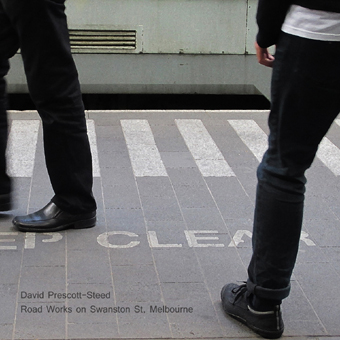
01. Road Works on Swanston St, Melbourne (30:41)
Download
This recording was made during the 2012 road works in Melbourne’s city centre. In response to years of traffic congestion, Swanston Street was finally developed to make it more people friendly. Sitting and listening throughout the recording, I was intrigued by the complex symphony of mechanical sounds that occurred in the process of creating a quieter, and more personable, public area.
GFR 055
Rui Chaves & Matilde Meireles | Chasing ∞
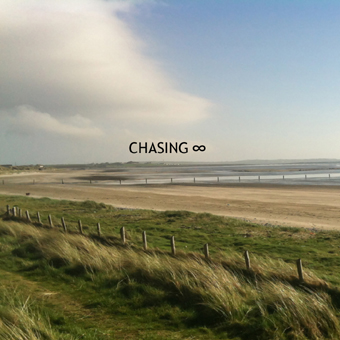
01. Chasing ∞ (09:52)
(mix made specially for heaphones)
Download
‘Chasing ∞’ seeks to expose the underlying political, temporal, spatial and performative conditions in which soundscape recording takes place.
These conditions are mediated through the presence of a field recording artist and the use of an electric guitar, as the primary recording device used to capture the wind. Creating a form of performance, in which this unpredictable element creates a stochastic process, that ultimately determines the sonic process.
This forms part of a larger body* of work in which this presence is explored by a visual framework, that articulates narrative through different temporal interventions - during one day in one place.
Jose Ricardo Delgado | Paysage Sonoro Columbia
01. Adentro de la Cueva de los Guacharos (07:24)
02. Arroyo en la Reserva el Paujil (04:57)
03. Cerro Thomas en el PNN Tuparro (05:22)
04. Ocaso y amanecer en el Paujil (05:20)
05. Ranas en la Reserva el Paujil (09:27)
Download
GFR 053
John Tenney | American Places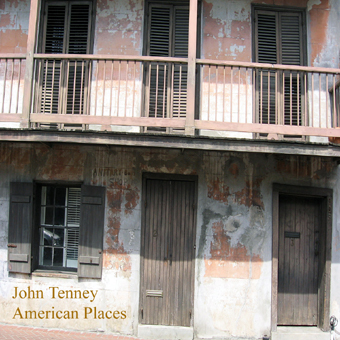
01. Life Goes On Post-Katrina, New Orleans French Quarter 2006 (5:18)
02. Thrift Store with Moving Furniture, Springfield Oregon 2003 (1:53)
03. Trains, Trucks and Birds, Barstow California 2006 (4:12)
04. Street Talk 1, New Orleans 2006 (1:20)
05. Piano Bar and Euphonium, Frenchman Street New Orleans 2010 (2:53)
06. Night Roller Coaster, Primm Nevada 2006 (2:00)
07. Fourth of July with Turkey, Lafayette California 2003 (:49)
08. Fisherman's Wharf and Musée Mechanique, San Francisco 2004 (4:49)
09. Stardust Hotel, Las Vegas 2006 (2:13)
10. St. Stupeds Day, San Francisco, April 1 2004 (5:06)
11. Amoeba Records, Berkeley California 2003 (1:49)
12. Polish-American Picnic, Concord California 2006 (1:08)
13. 99 Ranch Market, El Cerrito California 2003 (4:32)
14. Street Talk 2, New Orleans 2006 (:39)
15. Store with Strange Toy and Family, Mission District San Francisco 2003 (1:19)
16. St. Louis Cathedral, New Orleans, Interior 2006 (1:45)
17. Desert Winds in the Halls, Death Valley Junction California 2006 (2:51)
18. New Orleans, Jackson Square, Distant Guitar, Train on the Mississippi River 2006 (3:54)
19. Street Talk 3, New Orleans 2006 (:45)
20. St. Charles Streetcar, New Orleans 2010 (3:50)
21. Weedwhackers, Lafayette California 2006 (1:16)
22. Caesar's Palace, Las Vegas 2006 (1:32)
23. St. Louis Cathedral, New Orleans Holy Week 2006 (1:21)
24. Woodpecker and Other Birds, Vicksburg Mississippi 2010 (1:01)
Download
Sound has always fascinated me. Music too. I could sing before I could talk, according to my parents, and I started playing the violin when I was five. I still play it; after almost 45 years as a professional musician, I still love it! And all that time, I kept my ears open for every kind of sound there was… So, about ten years ago, I started making field recordings of the sound I encountered. I integrated some of them into my soundscapes and compositions, which you can hear on my web site. But all these sounds have a life of their own, pure and unchanged. I edited these tracks from many, many hours of raw sound. Nothing was altered, except for the compression necessary to create mp3s. Please enjoy this panorama of sound, which is a tiny fraction of what you can hear around the US!
José Maria Pastor Sánchez | Comienzo V
01. Comienzo V (67:00)
Download
Este COMIENZO V es el resultado de la musicalizacion de los recuerdos y sensaciones recogidos de una manera intrínseca en las grabaciones de campo recogidas durante el mes de julio de 2011 en Uruguay
GFR 051
Carlo Giordani | Dighe
01. Si Sale
02. Organi di Fondo
03. Pompa Diesel
04. Stramazzi EL6
05. Bocca del Ghiacciaio
06. Cunicolo
07. Sbuffo d'Acqua
08. Vento
09. Motori Esterni
10. Canale di Collegamento
11. Ancora Vento
12. Stramazzi EL5
13. Tunnel-Posizione 23
14. Elementi 4-5
15. Venerocolo-Lavedole-Pantano
16. Il Respiro della Diga
17. Il Cuore della Diga
18. Sirena
19. Turbina
20. Centrale
Total Running Time: 52:33
Download
(see pdf book for details)
GFR 050
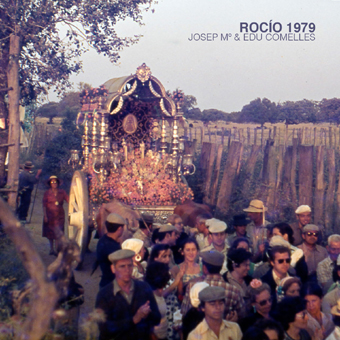
Josep Mº & Edu Comelles | Rocío 1979
01. Intro
02. Campanas
03. Tambores
04. Himno
05. Viva La Blanca Paloma!
06. Hermandades Pasando Por La Ermita
07. Himno II
08. Guapa!
09. Cantos y Campanas
Total Running Time: 17:47
A gathering of soundscapes recorded on a Phillips Cassette tape in 1979 at Rocío (Huelva, Spain) by Josep Mº Comelles. Recovered and remastered in 2012 by Edu Comelles.
I arrived to “El Rocío” (The Dew, in Spanish) for the first time in September 1978. Coming by car from Tarragona. It was dark when I approached the road from Almonte to “El Rocío”. An endless straight line flanked by shadows. No vehicles. The shadows faded at the end of the forest and the road. The starlight bordered a clear sky. At the end some flickering yellow lights. “El Rocío”. Turn left onto a street flanked by some light muzzles. The pavement disappears and I navigate over soft sand that overtakes the car. Tailgating the car trembles in the sand to a huge square cut of by eucalyptus that reach the sky. Second street on the right. Make no mistake. Take a turn, stop, turn off the engine, open the door. Thousands of frogs and bullfrog fill the black night screaming.I have never forgotten my first impression on the “El Rocío”. It was a raucous croaking silence of water creatures. Then I lived in “La Aldea” several months and got used to the fascinating silence of the marsh, only marred by the winds from the sea, by the rattling of tractors, by the scream of a neighbor. At night, again the croaking and croaking. Time passed and the week of the procession closed in slowly. Colleagues came to see what festivals were even then "real", not variety shows where locals dress up. We thought it was worth filming in super8. The two hours of film, today you restore images, carefully preserved by a professional telecine that have great ethnographic value, since this film is the most complete preserved from that time.
Initially, did not think about the sound. The first year we realized that the sound of “El Rocío” - still not called soundscape - was baffling and fascinating: charrés bells, the hoof beat of the horses on the sand, the buzz of conversation, the distant drum and bagpipes, the singing monodic, shocking, of a fandango de Huelva, raucous singing of popular sevillanas with drum, bagpipe and “cañas”, reeds that mimic castanetes, tac, tac, tac ... tac, tac, tac. La Marcha Real badly interpreted by an orchestra mounted on a trailer drum while that crowd yelled: “Guapa”, Beautiful!, Beautiful!, Beautiful!, Nice!, Nice!, Nice!.
A hermitage particularly noisy, white in its simplicity that enhanced echoes and reverberations of private prayer and hailmaries. The background noise of the crowd in the chapel before the jump of the fence. The camera took care of recording the images, but no the sound. The second year we thought that image alone was not enough. It was necessary to get the sound. Our phonograph was to be poor, "cassettes" Philips that had mothballed the tape recorders at the expense of monoaural sound with a pitiful quality because the tapes were a third of the professionals. No directional microphones, no giraffes, no zeppelins nor anything. Then the resulting cassette was homemade edited and once the process was over the descriptive audio was added over the left or right channel of a stereo recorder. The three resulting cassettes had to be recorded on the magnetic stripe sound that clung to the super8 film, the four or five millimeters of the band went to a track of a millimeter wide. It sounded, that's saying something ...
Thirty years later that old super8 tape was re recorded manually in order to be digitally edited. The original intention was merely a teaser image from two hours of footage. Soon I thought it was better to work more seriously and recovered a coil of 30 minutes I reduced to 20. I had the original tapes. When I asked Edu Comelles to look it over and see what could be used, he listened them and said no, that was just noise. So I decided I could explain the images with songs without the soundtrack. “Almonteño, let me take her with you” was my second job in video editing, in 2008. Clumsy, with a bad copy filmed without original sound. Yet the images are still alive.
Not sure why Edu Comelles thought that those noises clumsily recorded between 1979 and 1981 have some value. I
hear and I am fascinated by that are the echoes of a lost time, for me are as if in a loop of a sound universe someone
grasped full of noise and interference, but that refers to a time and a past that, outside this video footage and audio,there is very little in our heritage.
(see pdf books for more details)
GFR 049
VA | Green Field Recordings | World Listening Day 2012
01. Acoustic Mirror - Windchimes, rain, wind,
thunderstorm
02. Atilio Doreste - Cave Of Last Mencey
03. Becky Grajeda & Charlie Schneider - Sailing
04. Björn Eriksson - Deposit
05. Flavien Gillié́ - Abattoirs d'Anderlecht
06. George N. Weinisch - Noon at Saugerties Lighthouse
07. ieva - EDSA
08. Joe Stevens - Machine Works
09. Lucy
Stevens - Wasp vs Ant
10. Luís Antero - Roda de Água de Janeiro de Cima
11. Miguel Isaza - Over the City
12. Sala - Lukna, Byways and Outskirts
Total Running Time: 52:56
As
usual since 2010, the year
we celebrated the first World Listening Day, the portuguese netlabel dedicated
to the world of field recording - Green Field Recordings
- has invited artists from
their catalog, and others who want to join to celebrate the July 18th through special
editions. So it was with the
first collection "VA, The
Collector of Sounds, World Listening
Day 2010/2011 (http://greenfieldrecordings.yolasite.com/audio-2012.php)
and now with the launch of this new
sound work, making the joining around
the World Listening Day more 12 artists and their sound
pieces. This is also an issue
within the project Sounds of Europe (http://www.soundsofeurope.eu/),
where Green Field Recordings have presence.
I sincerely hope that you all like this
work.
A special thank you to all the artists who accepted the invitation
launched this year!
Best,
Luís Antero |
Green Field Recordings
Download
GFR 048
Virgilio Oliveira | Rio Douro/Douro River, Vol. 2
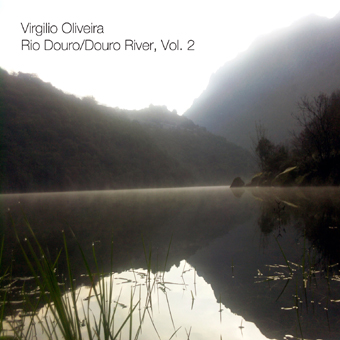
01. Rio Douro/Douro River, Vol. 2 (19:30)
Rio Douro/Douro River, Vol.2 is a compilation of several aural happenings and ambiences captured during the Winter of 2012 in the Rio Douro, Portugal. During the hot months of Summer, the wild life is predominant in the soundscape, which seems to cloth everything else around. With the arrival of Winter, life seems to slow down, and an apparent quietness invades these spaces. The fauna, the tourism, the labour in the vineyards, and even the local inhabitants seem to vanish from the landscape, as they wait for the warmer months of Spring.
GFR 047
rui almeida | in and around the bosphorus. a collection of sounds
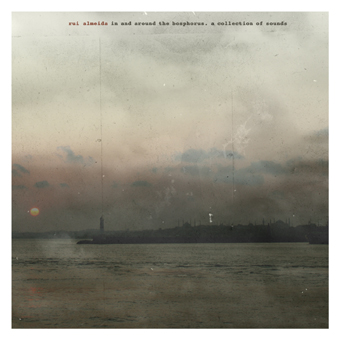
01. in and around the bosphorus (16:49)
download
(see pdf book for more details)

GFR 045
SiJ | From Inkerman to Sevastopol
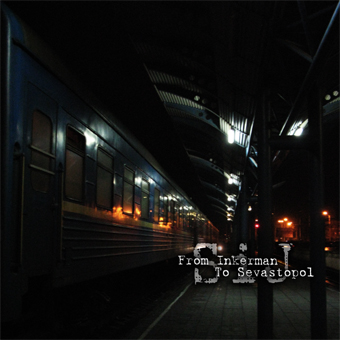
01. 1529 km - 1531 km (01:57)
02. 1531 km - Inkerman (03:01)
03. Inkerman - Sevastopol #1 (02:06)
04. Inkerman - Sevastopol #2 (07:26)
download
(see pdf book for more details)
GFR 044
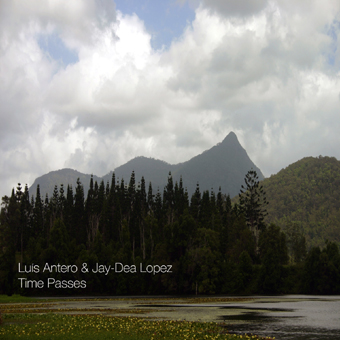
Luís Antero & Jay-Dea Lopez | Time Passes
01. Dawn (02:34)
02. Sunrise (04:20)
03. Morning (03:35)
04. Midday (01:33)
05. Afternoon (03:08)
06. Evening (04:52)
07. Midnight (03:55)
How does sound measure the passage of time? This is
the question considered in Time Passes, the second collaborative work by Luis
Antero and Jay-Dea Lopez. Time Passes explores the way in which natural sounds
mark the movement of the sun from morning till night. Field recordings weave
around guitar work, with each track signalling the passing of time as heard in
the sub-tropical forests of Australia.
Jay-Dea Lopez
(see pdf book for more details)
GFR 043
Anton Mobin & Luís Antero | Lavoirs/Lavadouros
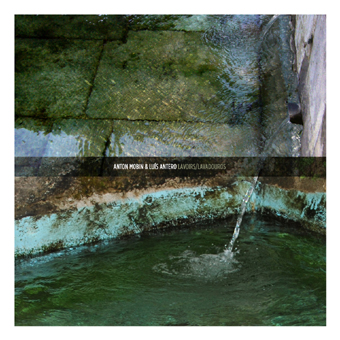
01. Anton Mobin - Lavoir # 1 (Avaray, Paris, France)
02. Anton Mobin - Lavoir # 2 (Honfleur, Paris, France)
03. Luís Antero - Lavadouro # 1 (Ervedal da Beira, Oliveira do Hospital)
04. Luís Antero - Lavadouro # 2 (Lajeosa, Oliveira do Hospital)
05. Luís Antero - Lavadouro # 3 (Alvoco das Várzeas, Oliveira do Hospital)
06. Luís Antero - Lavadouro # 4 (Piódão, Arganil)
07. Luís Antero - Lavadouro # 5 (Coucedeira, Vide, Seia)
Total Running Time: 59:32
To listen the rural work is always (at least at this present time) a quest for the natural sounds, sounds linked to the Past, sounds that we like to think that they have endured over the years until now. Fascinated by the nature of those sonic structures, natural compositions and soundscapes we often forget that some of those sounds that we are qualifying as ancient, they are not at all old. They have, in fact, been reconstructed and brought to us as a remain of the past.
The sound of washhouses its one of those rural world soundmarks that have been recreated and brought to us as a witness of a sonic era that no longer exists. Now a days that very sound is a signal, a remainder of what it was. What I found interesting of washhouses recordings now a days is that they are capturing the core of a lost soundscape. What is left on washhouses is the basic element that made those spots become alive, the stream of water. And around this stream of water a very complex soundscape articulated there half a century ago.
Every time I hear the recordings done by Anton Mobin and Luís Antero I’m wandering how those places would sound, fifty or sixty years ago, I’m wandering how messy, loud and complex a soundscape like that would have been. I’m thinking about the Honfleur washhouses and I’m wandering the soundscape by summer 1944, while the whole Allied Forces were crossing that area. I’m also wandering how much loud would be some of the lavadouros at Alvoco by the 25th of April,.. 30 years ago, or not even in any specific day, but, how those washhouses and lavadouros would sound like when they were active, full of women, smashing clothes to dry them up, scrubbing, washing and splashing water, stretching clothes to dry, and carrying them back home. Every time I hear those recordings I’m imagining all that has been gone, for good or not we do not know, what we do know for certain is that our mothers and grandmothers are glad to have washing machines of their own.
To listen to those recordings is a magnificent example of very iconic and simple soundmark that stands still, over the years, reminding us that this soundmark was just a part of a bigger soundscape that now is lost.
Edu Comelles Allué
(see pdf book for more details)
GFR 042
MZ-N710 | CC 72061 - LE CRÉPUSCULE
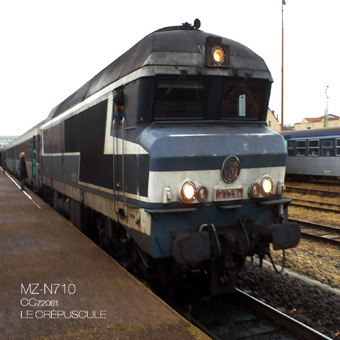
01-06. (48:50)
In december of 2011 the French diesel locomotives CC 72000 series ended their service on the SNCF lines. That series built in the late 60's and early 70's remains as the most beautiful French diesel engines. On november 15, 2011, I travelled from Lyon to Roanne on a "Corail Intercités" train drived by the CC 72061, one of the last to be in service. This is a recording of the noise heard on that train, and especially of the peculiar sound of the diesel engine. (Marc Game)
(see pdf book for more details)
GFR 041
MZ-N710 | Autorail X 2856
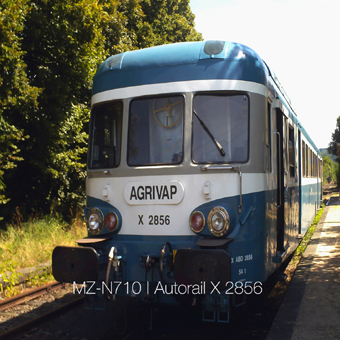
01-06. (37:25)
When I was a child, I used to travel on Autorail X 2800 self-propelling trains with my parents, going on holidays in Auvergne. The nickname of these trains is bleu d’Auvergne, which is a sort of cheese too. Their noise remembers me memories of my youngest years, as the madeleine cakes for Marcel Proust. (Marc Game)
(see pdf book for more details)
GFR 040
Flavien Gillié | Des Lônes et des Pylônes
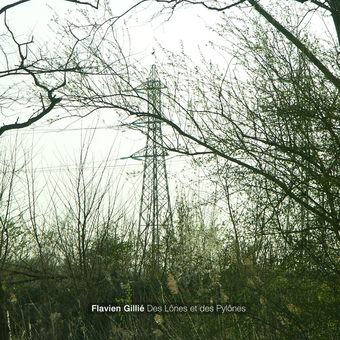
01. Des Lônes et des Pylônes (22:09)
download
These are selected field recordings around Niévroz (Fr).
A lône is a dead river, with a rich biodiversity, it might be the only part that still looks rural around Niévroz, all the rest has been built, becoming a semi-urban zone near Lyon. I don't go back there that often, but I like this desolated aspect of country, surrounded by the mists, sometimes even in summer.
I added three short stories in French, those texts have been written here somehow twenty years ago. I used to go for a long walk in the countryside every day, looking for solitude, trying to catch an echo of imaginary voices forgotten near the dead river. I used to take notes as I was walking, it's talking about village gossips, dead children, lonely old people, nothing is true of course.
(see pdf book for more details)
GFR 038
Le Son des Bruits | Asian Fade...
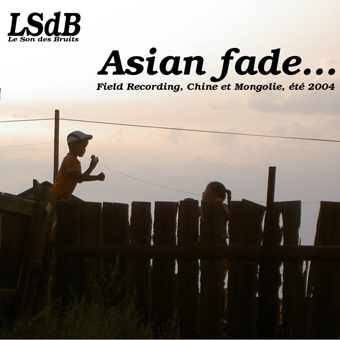
01 - Female singer in Ritan Park, Beijing
02 - Male singer in Rita Park, Beijing
03 - Food Market, Beijing
04 - Beijing Opera
05 - Megaphone on Market, Beijing
06 - Storm, Ulan-Bator
07 - Gandan Temple, Ulan-Bator
08 - Alcohol, Tsetserleg
09 - Monks and birds, Karakorum
10 - Under the Ger, Milk for yogurt, Steppe
11 - Kids Playing, Steppe
12 - Mongol Olympic Comitee, Khovsgol Lake
13 - Naraan walking
14 - Deer Hoof, Khovsgol Lake
15 - Bloody Flies, Khovsgol Lake
16 - Trot, Moron
17 - Tsataan Chaman Ceremony, Khovsgol Lake
18 - Mr No-Teeth and his Deers
19 - Milking and Singing, Steppe
20 - Motorcycles and Camels, Darantsetse
21 - Khomii at the bar, Ulan-Bator
22 - Kids, Zuunmod
23 - Gandan Temple Outside Gong, Ulan-Bator
24 - Inside Gandan, Ulan-Bator
total running time: 46:31
Those are small fragments collected during a three months travel between Beijing and Mongolia.
The soundscape of Beijing is delimited by precise boundaries. As in every metropolis filled with human activities, each one of them having its peculiar sound, the density of activities restrains our horizon to a certain perimeter.
Mongolia
reveals a different experience. The field opens up, allowing us to perceive
sounds not as borders of the sounscape but as elements of their own in this
sounscape. The contact with natural elements (wind, yacks, birds) is more
present. The human component is then felt in relation with those elements, when
milking yacks or during shaman ceremonies when we hear the howling of a wolf,
or felt as a pure form, in spiritual activity, in a Buddhist temple.
GFR 037
Chris Lynn | A Dance In Slow Motion Along The Pacific Rim
01. Long shot on the Pier (future fisherman)
02. Stanley Park Afternoon
03. Morning Coffee (looking over Maps)
04. Scenic view with voices (leaving Vancouver)
05. Whistler stream (summer thoughts)
06. When a Humpback whale goes down
07. Emily Carr Gallery in slow time (with Yasuo Akai)
08. Chesterman Beach (Pacific Rim Melody)
09. Departure with Mountain Rain
10. Grey Notes (long shot of the pier)
total running time: 39:22
A collection of Field Recordings and compositions set in British Columbia, Canada except for track 8 which was recorded in Maryland, USA and Track 7 which was partially recorded in Tokyo, Japan.
Special thanks to Composer Yasuo Akai for his contribution on Track7
GFR 036
SALA | Unsafe Escape: Apparition London
01. Unsafe Escape: Apparition London (21:54)
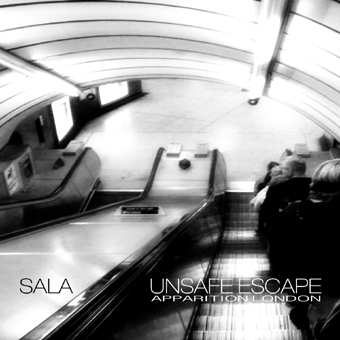
SALA "Unsafe Escape: Apparition London". Something from my and my wife's summer in central London and Charlton. A few intense days spent in museums, undergrounds, gardens and street dust. Really unsafe escape. I tried to express it in this short, time-compressed, multi-layered, album: just like the coming home at the end of the tired day. Sitting in underground train you are drowned in this half-asleep/half-awake state when you still hear some sounds around you and, at the same time, you almost dreaming blurred pictures of all day walks through the town. And all this is mixed with beautiful morning birds in the small garden in Charlton. Apparition in concrete music. For Ausra and Vadimas with love.
GFR 035
Joe Stevens & Luís Antero | Seaside Sounds
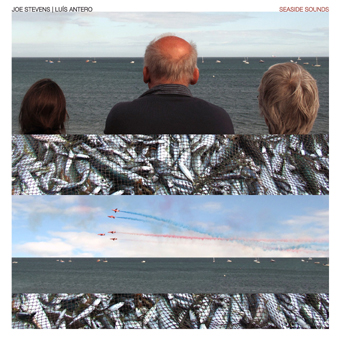
01. Joe Stevens - Weymouth Carnival (Dorset, UK, 2011) (17:59)
02. Luís Antero - Domingo de Pesca (Praia da Tocha, Portugal, 2010) (20:41)
01. This recording was captured as part of Joe's ongoing survey of the sounds of the seaside and was captured during Weymouth carnival, 2011. We start with biplanes flying across Weymouth bay, followed be Punch & Judy and then time in an amusement arcade. Next we hear the red arrows display team, ending with some fireworks. Recorded on Sony PCM-D50 using a rode NT4.
For me the sounds of the seaside are some of my favourite sounds and include: the general chatter of people close together on the beach, all mixed with the waves and seagulls screeching. The sound of families playing together, re-connecting. Of children shouting and screaming, and the sound of laughter.
Further explorations and notes can be found on http://soundsofseaside.tumblr.com
02. "The Art-Xávega, also known as fishing "trawl" is still a reality in Tocha beach, in central Portugal. The Art-Xávega dates back to the nineteenth century, at which time the fishermen go out by boat to cast their nets into the sea. After returning from the labors, the networks were removed from sea to shore with the help of oxen, and a crowd of men and women who collaborated in this tough task to extend the network and pull it through sand and remove all the fish."
One Sunday in July 2010, in the company of family, I could watch live the noble art of fishing described above. Although the cattle are now replaced by tractors, the spirit remains unscathed. Dozens of men, women and children help in the task of separating the fresh fish for the respective boxes.
The sound narrative presented here reflects this reality still present Art-Xávega, while paying tribute to all men and women who work at sea and on which it depends for its survival. Evoked by sound is also memory. (recorded with a Zoom H4 digital recorder)
GFR 034
Virgilio Oliveira | Rio Douro/Douro River, Vol. 1
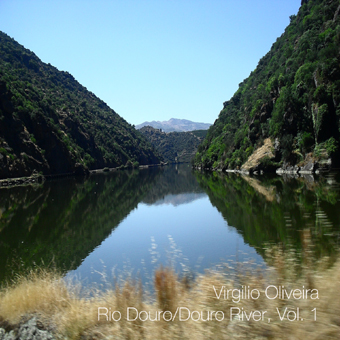
01. Miranda (Miranda_do_Douro) (03:50)
02. Freixo de Espada à Cinta (04:11)
03. Cigarras (00:32)
04. O Padre Zé (noite) (01:37)
05. Pastor (Pocinho) (03:24)
06. Primeiro Comboio (Nagozelo do Douro) (05:51)
07. Tear (02:04)
08. Comboio (Nagozelo do Douro) (01:36)
09. Estação (Pinhão) (02:52)
10. Carrapatelo (01:32)
11. Praia Fluvial (Porto de Rei) (01:28)
12. Ribeira (Porto) (01:55)
13. Foz do Douro (02:55)
download
"Rio Douro/Douro River" is the result of a field recording journey along this northern Portuguese river.The trip was undertook in the Summer of 2010 by Virgilio Oliveira and Joana Estevao, both students at the LCC/UAL at the time, with the intention of capturing the different sonic ambiences the Douro encounters/creates through is path on to the Atlantic Ocean. The ancient rail line that follows part of the river's journey, the ever present cicadas, the carps and most importantly the people that inhabit these areas, create a beautiful sonic symbiosis between nature and man. More info on the project at http://douro-mapasonoro.blogspot.com/
GFR 033
VA | O Colecionador de Sons | World Listening Day (2010-2011)
2010
01. Alexei Biryukoff - A bird and the thunder (04:57)
02. François Emmanuel-Fodéré - Saundatti - fun fair (04:20)
03. François Emmanuel-Fodéré - Saundatti - fun fair (04:45)
04. François Emmanuel-Fodéré - Saundatti - nocturnal ceremony (05:00)
05. Anton Mobin - Vegetables song (04:48)
06. JM Charcot - Le lac des pyes (04:47)
07. Luís Antero - Porto Covo 2010 soundscape (version 2) (06:00)
2011
01. François-Emmanuel Fodéré – Enfer Mecanique (05:25)
02. François-Emmanuel Fodéré – Muezzin, bells & insecto (04:34)
03. François-Emmanuel Fodéré – Celebration of Kannada (03:51)
04. Claudio Curciotti – Machine Guns (05:58)
05. Claudio Curciotti – Same God’s Sound (02:11)
06. Jose Maria Pastor Sanchez – No Es Una Crisis, Es Una Estafa (02:59)
07. Jose Maria Pastor Sanchez – Le Llaman Democracia Y No Lo Es (03:00)
08. Juanjo Palacios – Bramidos (05:17)
09. Mecha/Orga – 04:23 (04:23)
10. SALA – Ain Starts In Old Village Cemetery (05:12)
11. SALA – Bycicling Through The Wood (05:55)
12. Udo Noll/Radio Aporee - Praha, Zizkow, freight train at night (04:00)
13. Udo Noll/Radio Aporee - Praha, Zizkow, trains in the distance (03:30)
14. Luís Antero - Eco (02:50)
15. Anders Östberg - Ridön Island (05:34)
16. Dan Godston - Lake Michigan in Waukegan (02:05)
17. Eric Boivin - Christ Cathedral (05:00)
18. Eric Boivin - Electra - Fonderie Darling (03:13)
19. Jaydea Lopez - Bats - Afternoon (01:33)
20. Jaydea Lopez - Bell Birds (04:53)
21. Jaydea Lopez - Sweetness (02:47)
22. George N. Weinisch - A Piccadilly Line Service (05:46)
23. MZ-N710 - Brame du chevreuil (03:22)
24. MZ-N710 - Grillons (03:36)
25. MZ-N710 - Oiseaux et moutons Chez le Maître (04:22)
26. MZ-N710 - Orage Chez le Maître (03:05)
27. MZ-N710 - Vent et pinson (03:48)
total running time: 2:22:47
download
On days 16, 18 and 21 July 2011 on Radio Universidade de Coimbra (http://www.ruc.pt/), Radio Zero (http://www.radiozero.pt/) and Strange Frequencies Channel (http ://astrangerparadise.com/strange-radio-frequencies), respectively, aired issue 32 of O Colecionador de Sons, portuguese radio program devoted entirely to the world of field recording, curated by Luís Antero. As happened in 2010, O Colecionador de Sons dedicated this issue to the World Listening Day, celebrated worldwide on 18 July.
For this special issues were invited sound artists from the catalog of Green Field Recordings netlabel (www.greenfieldrecordings.yolasite.com) and launched the challenge to many others that if they wanted to join, and there were many.
To prove it is this new edition of Green Field Recordings, with more than 2 hours of field recording, from Australia to Portugal, through Egypt, France, India, Lithuania, Spain, Germany or the Czech Republic.
This edition respects the original alignment of the two issues mentioned, dividing the alignment by their respective years, as it should be.
We sincerely hope that the work now presented gives you so much pleasure in ear it, as we had in produce it.
In the name of sound diversity and also in the name of the World Listening Day, our deepest thanks to all the participating artists!
Luís Antero
(more details, icluding a text by Eric Leonardson, the Director of World Listening Day, in the pdf book)